Showing posts with label techniques. Show all posts

Sunday, May 10, 2009

Development of Studio Glass

Glass art is that part of the glass industry where glass gets used as an artistic medium. Applications can include stained glass, working glass in a torch flame (lampworking), glass beadmaking, glass casting, glass fusing, and glass blowing.

As a decorative and functional medium, glass was extensively developed in Egypt and Assyria, brought to the fore by the Romans, who developed the art of glassblowing, with the stained glass windows in European cathedrals as living proof of spectacular art and skill. Great ateliers like Tiffany, Lalique, Daum, Gallé, the Corning schools and Steuben Glass Works took glass art to the highest levels.
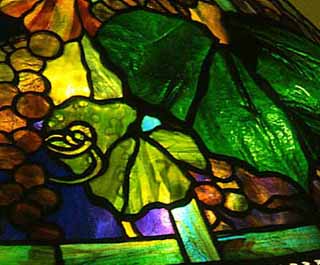
(Tiffany, Lalique, Steuben)

Glass from Murano (also known as Venetian glass) is the result of hundreds of years of refinement and invention. While there are currently more hotshops and glass artists working in Seattle (USA), Murano is still considered as the birthplace of modern glass art.

Prior to the early 1960s, the term "glass art" referred to glass made for decorative use, usually by teams of factory workers, taking glass from furnaces with a thousand or more pounds of glass. This form of glass art, of which Tiffany and Steuben in the U.S.A., Gallé in France and Hoya Crystal in Japan, Royal Leerdam Crystal in The Netherlands and Kosta Boda in Sweden are perhaps the best known, grew out of the factory system in which all glass objects were hand or mold blown by teams of 4 or more men. The turn of the 19th Century was the height of the old art glass movement while the factory glass blowers were being replaced by mechanical bottle blowing and continuous window glass.

The United States has had two phases of development in glass. The early and mid-1900s had a number of factories such as Fenton, Stuben and others turning out both functional and artistic pieces. The second phase of glass in the United States happened in the 60's when Harvey Littleton, Dominick Labino and Marvin Lipofsky kicked off the studio glass movement by creating small-scale furnaces for the use of glass as an artisic medium. This modern studio glass movement caught on in design schools and Littleton would go on to found the first fine art glass program at the University of Wisconsin at Madison; Marvin Lipofsky, founded the second university-level glass program at the University of California at Berkeley in 1964; and Dale Chihuly initiated the glass program at the Rhode Island School of Design that same year.

(Harvey Littleton, Dominic Labino, Marvin Lipofsky, Dale Chihuly)

As more artists learned from artists before them, a growth of studio art glass spread across the country, with the largest concentration of glass artists working in Seattle. The Pilchuck glass school near Seattle has become a mecca for glass artists from all over the world. Students, who may actually be college students or established artists, have the opportunity to attend masterclasses and exchange skills and information in a environment dedicated solely to glass based arts.

Tuesday, April 28, 2009

Recycled glass art.

Although my initial starting point to get involved with glass has shifted from beads to other methods of working with warm glass, I have kept an interest in beads, as I can see their use in combination with other glass techniques.
I've also had an interest towards sustainabitity and was (and still am) always looking for projects that could be developed into community based job creation projects.
On one of my many researches into sustainability and ecological responsiblility I started getting various information about beads made from recycled glass.
Although there are many websites that sell the recycled glass beads, one of the most informative sites was the eshopafrica where they actually take you step by step through the process how various sorts of recycled glass beads are made in the typical West Africa tradition.

In Swaziland, South African, a glassblowing hotshop Ngwenya Glass (the Siswati name for "crocodile") uses only recycled glass to create their enchanting glass animals.

My husband and I saw a similar set up on the Island of Mauritius, where glass blowers were also making a variety of products using only broken coke bottles. I couldn't resist the glass dodo's!

For the people in these communities, the hot shops are the lifeblood and offer not only job creation and skills training , but also focus seriously on preserving the environment and creating a sustainabille industry for the future generations.

Wednesday, April 15, 2009

Glass is Glass is glass is glass.....?

When I first started being interested in glass, I bought several books, subscribed to magazines AND hit the thesaurus / dictionary button on my computer. It became very clear very fast that one needed first to get to know glass properly before attempting to start working with it.

One of the great producers of art glass is Spectrum and they have extensive knowledge of not only the different types of glass but also the background, technique how these particular glass varieties came into being and application.
ANTIQUE
Term applied to art glass produced by the historical mouth-blown cylinder method. The craftsman blows a glass cylinder which is annealed and cooled. The cylinder is then scored lengthwise, separated, re-heated and folded out into a flat sheet. Common characteristics include attractive linear striations and a very pristine surface.
BEVEL
Cold glass (usually clear, thick plate) with edges that have been ground and polished to an angle other than 90 degrees. Transmitted light is refracted and a prism-like effect results. Bevels are available in a variety of sizes, shapes and geometric configurations (called "clusters") for incorporation into leaded glass work, as this example shows of Shengda Glassware Products.


BILLET
A glass ingot, similar to a dalle, used in glass casting.
CATHEDRAL GLASS
Describes transparent glass that is monochromatic -- i.e., single color sheet glass, with smooth or textured surfaces.
CATSPAW
A surface texture resulting from the chilling of hot glass on a cool table. The appearance is likened to the paw prints of a cat.
CONFETTI
Paper-thin elements of glass that can be incorporated into a fused or blown glass design. Also called "shards."
CRACKLE
The hot cylinder of glass is dipped in liquid, causing radical, random fissures in the glass. The cylinder is then reheated and further blown to heal the surface fissures.
DICHROIC
Commonly used term to describe glasses that have been coated with one or more ultra-thin crystalline layers of transparent metal oxides designed to enhance reflections at specific wavelengths of light. The process occurs in a vacuum chamber at elevated temperatures. The resulting effects are striking and brilliant color reflections at varying angles of incidence.
FLASHED
Glass of one color with a very thin layer of another color on one side. Flashed glass is often used for etched or sandblasted glass art. When sections of the thin color layer are removed, the base color shows through.


FRIT
Ground glass, ranging in particle size from gravel-like to a fine powder. Frit is sometimes used as a raw material in glass manufacture, and sometimes as a coloring agent or for decorative effect in hot glass crafts like blowing and fusing.


IRIDESCENT
Surface treatment in which a layer of metallic oxide is bonded to the hot glass surface just after sheet-forming, resulting in a colorful, shimmering effect.
MILLEFIORI
Italian for "a thousand flowers." Commonly refers to glass objects made from masses of murrini slices, sliced from a cane.
CANE Glass cylinder consisting of groups of rods of different colors, which are bundled together and fused to form a design that is visible in cross section.
MURRINI
A thin slice of complex glass cane that can be used as a component in another glass object.


cane, murrini, millefiori

NUGGET
A small, irregularly shaped "glob" of glass, flat on the bottom, rounded across the top. Nuggets are made by literally dropping a small amount of molten glass onto a flat surface. Frequently called "globs," they are often incorporated into leaded glass artwork.
OPAL or OPALESCENT
Said of any glass into which a material has been introduced at the raw materials stage (usually fluorine or phosphorus) which causes a degree of crystallization to occur, and creates opacity in the glass. Reflected light is colorless, therefore white. The degree of opacity (and "whiteness") is variable depending upon composition and temperatures used in the manufacturing process. Commonly then, white glass is called "opal."
RODS
Used to describe cylindrical, pencil-thick sticks of glass used primarily in flameworking and glass bead making. They are available in a wide color range and many expansion coefficients.
STRINGER
A spaghetti-like glass shape used as a decorative element in the hot glass arts.

The other 2 giants specialising in fusible art glass are Uroborus and Bullseye Glass , who have developed glass with the studio artist in mind and also offer a wide variety of glass products, machinery, tools and more.

Monday, April 13, 2009

Glass and Fire

When I first saw a Chihuly chandelier (be it on a picture) I fell in love with contemporary warm glass there and then.
In the past few years I have been working with warm glass and learned to apply various techniques in order to create what was in my mind.
I still battle with them and it made me realise even more that working with glass is more than just bringing the image in your mind to life in a tangible form. To work with glass is so much more than expressing your creative inner self onto canvas with paint or other media.
To work with glass requires a serious degree of technical knowledge of the glass, the equipment and the temperature have to be perfectly insync. What is thermal shock? Wat is devitrification? Why is it important to know what COE means? Why is annealing crucial? I found lots of valuable information on the Warm Glass website and only one glimpse at the table with the various kiln forming processes and their respective temperatures gives an idea how one has to keep a cool head with kiln work. Another Q&A website is Glass Fusing made easy, which also looks at q&a when things go wrong. The Glass Art Techniques website elaborates on both hot and cold glass working techniques, the last one not only used to shape a work in its own right - even if no hot working techniques were applied - but also indispensable in many cases for the finishing touch of the work.
In other artforms, the artist can choose the time spent on the work, go away to reminisce and reflect, come back to add a detail or change colours or images, sometimes taking months or years to bring the work to completion.
With warm glass, one has to visualise the finished work and travel back in time to the starting point. From the initial creative idea, before you even start cutting, there is more technical planning and execution involved than I think in any art form. If one piece of glass is cut wrong, ... if it was from the wrong sheet of glass with a different COE, .... if the temperature has been too high, low, fast, slow,.... These are only some of the factors that can make or literally break the work.
Even though there are many books, websites, courses, etc that teach you step by step, it eventually comes down to test runs and punctual record keeping. If you know how the various techniques like slumping, fusing, tack fusing, casting work , refine the techicallities to suit YOUR kiln. A difference in make, year of fabrication, size of kiln, all play a vital role in the particular work performance of your kiln and to get to know this like it was another child will ensure less frustration in the future.

This is an example of a plate where I found out AFTER the firing that some of the Bullseye glass used was a striker glass - one that changes colour during the firing process.

Only when the kilndoor opens, you know if all the steps you planned were right.

Wednesday, March 25, 2009

European Glass 1

With my family living overseas, it's only natural that we've visited Europe regularly and especially since I started my glass studies, I've been making an effort to visit as much glass events, galleries and studio's as possible, when I'm there.

When we were there a few years ago, we took our children to Venice. For us (hubby and I) it was like coming full circle, as we had been here on our honeymoon. We have a small glass piece of a man/woman embrace (about 20cm high) that we bought from the glass blowers on Murano.

Murano glass embrace.

It was my (our) first experience of a hot shop. Looking back after all these years , the work that those glass blowers do is far removed from the glitz and glam of renowned glass artists.

The number of "workhorses" far outweighs the number of famous glass maestro's like the Lino Tagliapietra's of this world, who wows audiences around the world with his virtusos technique and understanding of the traditional Venetian glassblowing techniques. He has been a king pin in a new renaissance in glassblowing and contemporary studio glassmaking and has been pivotal in helping to raise the international standards of glass craftsmanship.

For the normal workers,glass blowing on a popular tourist island like Murano it's a cut throat business. There are many hot shops and glass studios on the island and they all vie for business: the more people visit YOUR hotshop for a demonstration, the more people will possibly buy YOUR souvenirs. And there are just so many hot shops one will visit ! These people work for hard earned bread and butter and have to turn out the same little souvenirs over and over again. The Tourist industry is a great job creator.

While we were there with the family, we wanted a souvenire just like any other tourist, but couldn't afford something really spectacular. So eventually we decided on one of the typical tourist souvenirs that are made with the millions in Venice: the Murano Glass Sweets. We all chose a personal favourite and they're a reminder of a family holiday with a difference.

Friday, March 13, 2009

Glass maniac

Since doing my B Tech degree at the NMMU (actually from before that time) I was labelled (by my family members!) maniac. I took it in my stride because if maniac means an unstoppable fascination with the subject, then that's all right with me.

In the course of the past 5 years I have bought a small library of books regarding various specific hot and cold glass techniques, but I also bought books that were great for inspiration regarding design ideas: form, colour, shape ... .

I eventually also subscribed to various top glass magazines: Neues Glass, Fjoezz (which used to be "this side up"), Glashaus and Glass Art (which has stained glass aspects over and above the kiln working glass techniques.) Some magazines focus on the artists, feature interviews and description of their work, other magazine add articles and photo instructions about techniques. Only one would not be enough to grasp the great possibilities of working with glass, as many glass artists combine techniques to bring out various characteristics of the glass.

Even though I'm not full time busy with my glass (due to circumstances), I still get a thrill every time I grab a book and I can't wait for every new edition of my subscriptions.

Sunday, February 8, 2009

Networking in the Glass world

Networking : that should be the most important word in anybody’s vocabulary: to connect with people who share similar interests, who can in turn introduce you to other people in the industry.
During that particular year, a fusing glass course was offered in Cape Town and I knew this was a perfect networking opportunity. The course was organised by South African glass artist Nelius Britz of the Edge – Cape Glass Studio (left) and renowned Dutch glass artist Frank van den Ham (right) was presenter, teacher, artist all in one.

The course didn’t only touch on the design aspect of creating beautiful glass pieces, but shed serious light on the technical side. Frank elaborated on the crucial importance of knowing the technical and chemical properties of glass and how the different glass melting processes determine the final product. Sometimes it felt like being at school again in physics class.

Before and after a full fuse and slump, with a clear change in colour. Knowing the properties of the glass you use is imperative to the final result.

We went through the different processes of tack fusing, full fuse, drop mould, etc. The variety of glass enthusiasts attending revealed itself in the range of different glass items that were made.

After that year I kept in contact with the studio, even though the distance between our towns makes it a bit more difficult to attend exhibitions on a regular basis and “network”.

Sunday, February 1, 2009

Glass expression

I passed my 3rd year (diploma) in Fine Art at NMMU and was allowed to start my Btech degree: all focus on the glass work and a dissertation to write about it.

The most difficult point was determining an overall topic, that could be explored and developed into a portfolio of work. The process to reveal underlying thoughts and sources of interest and inspiration was a revelation in itself and I sincerely enjoyed digging deeper into my inner person. Seeing that a great part of my life I have worked with words, letters and text I eventually chose that as foundation for my Btech work. I was greatly inspired by Willem Boshoff, who creates installations based on many aspects of language and usage of words.

Most of the other students decided on a theme and all the work for that year was either one elaborate, complex piece or a series of variations on the same theme. Early on I decided that – because I still wanted to keep experimenting with various techniques – I wanted to apply these techniques in various, but totally independent works.

These were the projects that I planned:
  • "A Touching story": a Braille project : the tactile format of reading and communication
  • "Palimpsest": a historical project: with reference to bygone era’s and old parchments
  • "Ambigrams": a fun project: small glass jewellery with decorative word designs
  • "Food for thought" : the wisdom of words and a connection between food and the mental state of the human being.

"A Touching Story"

Recalling the phase of experimenting with slumping glass in the previous year, I realised that the texture of slumped glass was very tactile and my thought process brought me to the world of Braille where the understanding of language is totally by touch and feel. I communicated with the local blind association for advice regarding the best suited text for the project. I decided on:
“ There is a wonder about reading Braille that the sighted will never know: to touch words and have them touch you back”by Jim Fiebig.

I made it into a 4 part wall installation with the complete text sandblasted (for the sighted), the same text in Braille (slumped panels), and a decorative acid etch graphic lay out with the main key words: “wonder of touching words”. I eventually installed it at the local Blind association as a gift.

"Palimpsest"

Palimpsest = old parchment that has been rubbed out and cleaned, ready for the next text to be written, but shadows linger from the previous text.
This was a beautiful project to focus on a church ruins in our town and the history it entailed. I decided to make it into a light column as a allusion of the church as a beacon for the community. Silver stains and oxides gave the glass its brown weathered look. The elements on the pillar were a combination of historical remnants of the building, reference to its name and the connection to bible text and symbology. Some parts were separately fused pieces, that were attached with uv glue.

"Ambigrams"


The fun jewellery was inspired by a fascination of the graphic design aspect of ambigrams: is a graphical rendering that spells out one or more words not only in its form as presented, but also in another direction or orientation. Even though, in the end, this project had the least satisfying final result, the design of the words was great fun.

"Food for thought"

I wanted to make bowls with quotes / text but the particular texts needed to make a link between food (the bowls) and words (as the subject matter and in a deeper sense referring to the human ability to think and experience). Living in the Eastern Cape I also decided that I wanted to make one in each of the 3 official languages of this area: English, Afrikaans and Xhosa.


  • English: Born and bred in the Eastern Cape, it was only fitting to use a quote of Nelson Mandela referring to the mental as well as the physical needs and rights of the people.
  • Afrikaans: an exerpt of a poem of renowned Afrikaans poet Elizabeth Eybers. She was the first Afrikaans poet I read and I used passages of various of her poems on the birth announcements of my three children.
  • Xhosa is the most prominent indigenous language in the Eastern Cape and the proverb makes the comparison between an unexpressed mind and the inability to judge the inside of a fruit, just by looking at it.

I truly enjoyed this project and on the spur of the moment decided to expand the bowl series and made another few. While the first 3 were a combination of fusing, slumping, a detail painted in oxides, acid etching and sandblast, the expanded series was only done with acid etch and sandblasting onto a slumped bowl.


I enjoyed this year and learned not only about various techniques, but also about thinking and finding deeper meaning for what I can do with glass.

Monday, January 26, 2009

Glass jewellery - flameworking and fusing

While experimenting with the diverse warm glass techniques in the glass art studio of NMMU in that first year, I also had the opportunity to attend a 2 day bead making course with Ingrid de Haast in Cape Town.
http://www.glassbeads.co.za/blog/

I learned about how to work with a proper hothead torch and the right way to handle the mixing of the two gases. (I had been working with camping gas only up to now). The most valuable word I learned was “POOP” (propane, oxygen, oxygen, propane) – the correct order to open and close your gas bottles. Quite important advise if you don’t want to blow up the house! You can bet your bottom dollar, I’ll never forget that word ever again and what it stands for!
I also learned about the importance of protecting your eyes from the glare of the molten borosilicate glass and the variety of equipment that's available to make flameworking versatile and creative.

Ingrid showed me how to design the workspace for convenience and easy workflow and explained the various suppliers and differences between the various glass products.

Back at the NMMU Glass studio I also tried my hand on “fused glass jewellery” and tested some scraps for fusing, tack fusing and gold enamel results. I even made a necklace with small glass mosaic tiles screen printed and baked with glass enamels.

left: blue scraps of cathedral glass (traditionally used for stained glass windows) fused and gold enamal applied before 2nd firing. I combined it with flameworked beads and commercial beads.
middle: homemade float (window) glass stringers tack fused onto other pieces of float glass with gold lustre added before second firing. I combined this with commercial crystal beads.
right: I screenprinted patterns onto commercial available glass mosaic tiles with glass enamel and fired at lower temperature. Completed it with jewellery findings and black seed beads.

These were fun projects, but the other experiments with fused and slumped glass would eventually prove to be much more challenging to tap into my creativity and I embraced that with fervour and enthusiasm.

Friday, January 23, 2009

Glass techniques united

Once we were more proficient in the various glass techniques, we were encouraged to start thinking about a project where we could combine all we had learnt so far.
Because I feel it as a waste of time to just randomly make something, the proposed project needed to make sense to me.
Far from being an accomplished glass artist with potential exhibitions to work towards, I had to find a way to make this meaningful for me and assure that it wouldn’t end up in a corner gathering dust.
That’s when I decided to get my inspiration from familiar territory: my family.
I compromised to combine all the newly acquired techniques in the still traditional format of a leaded window and ultimately made 3 circular windows with distinct focus area’s.


The central window: our current life – combination of past and present

  • Central panel includes all our initials and excerpts of texts of our wedding ceremony and our children birth announcements. Techniques: texture slump, acid etch, gold paint.
  • First circle: very abstract reference to quirky attributes in my husband’s and mine personalities in context of our present life. Techniques: tack fuse and sandblast.
  • Second circle: reference to some of our cultural background with reproductions of sepia postcards of historical towns where we grew up and abstraction of lace patterns. Stains, oxide and acid etch.
  • Outer circle: a modern twist on family life. In the fashionable Zen tradition and everything Eastern : kiln casted and tack fused pieces with Eastern symbols representing family values like respect, honour, love, etc.

The window to the left: reference to my husband’s and my background

  • Central panel: a fused map from the area where we come from, with reproductions of stamps, done in silver stains and oxides, to refer to important dates and places in our lives. Some relief details were etched with hydrofluoric acid.
  • Outside circle: Acid etch, sandblasting and a few details with gold paint. These small sections refer respectively, in an abstract, ornamental fashion, to the music of our wedding and one of the cultural legacies of our country of origin: lace.

The window on the right: concentrated on our children

  • Central panel : as this was a combination of trial pieces of the first term, I had a duplicate of the central panel in the middle window and decided to repeat it in another one.
  • First circle: fragments of my children’s fingerprints rendered in both oxides and sandblasting.
  • Outer circle : an ornamental jumble of all the letters that constitute my children’s names. Techniques: stains and oxides and acid etch.

Although this project still has plenty technical mistakes it was, in the true sense of the word, a labour of love and gave me the opportunity to reflect on all that is important in my life.